
Vizio vs Hisense TV
Did you know about Vizio vs Hisense TV , if yes then this article is for you. We will be discussing. Read on for more.
It can be difficult to compare Vizio and Hisense because they both have competitive TVs in every price level. This article will compare the picture quality, smart features, gaming performance, build quality, sound, connectivity, and overall value of different manufacturers. Whether you’re searching for a high-end or low-cost Vizio or Hisense TV, this guide is for you.
To get the best smart TVs for your needs, it’s essential to become familiar with companies. In order to compare Vizio and Hisense, let’s discover more about them.
Vizio: Affordable Innovation at Every Home
Vizio is a well-known American company that produces TVs, soundbars, and subwoofers with cutting-edge technology (like Quantum Dot) at affordable prices. After a brief hiatus, they were able to bounce back and improve their products to the high standards for which they are known.
Vizio TVs are notable for their SmartCast function, which makes streaming more easier. If you prefer Google or Apple, you won’t be let down because Vizio also supports AirPlay and Google Cast. I recommend reading my guide on the top Vizio smart TVs if you’re a huge fan of Vizio TVs.
Also Read About TCL vs Samsung vs Vizio: Which TV Brand Better
Hisense: Cutting-Edge Technology at an Affordable Price
The Hisense is a Chinese company that has been in operation since 1969—longer than Vizio. Hisense has grown rapidly and successfully to become a well-known brand, especially in the last several years.
Hisense TVs are built using contemporary technology like ULED and Mini-LED. What does this mean to you? It suggests that you will get a picture of exceptional brightness, contrast, and color at a very fair price!
I am aware of Hisense’s guiding principle: if you give clients more for less, they will come back!
Google TV (Android TV) is usually the main smart platform that comes with Hisense TVs, though they can also come with the Roku platform or their VIDAA OS. In any event, Hisense is an excellent brand to consider at all price points since it offers a smooth user experience with cutting-edge features.
Vizio vs Hisense: Picture Quality
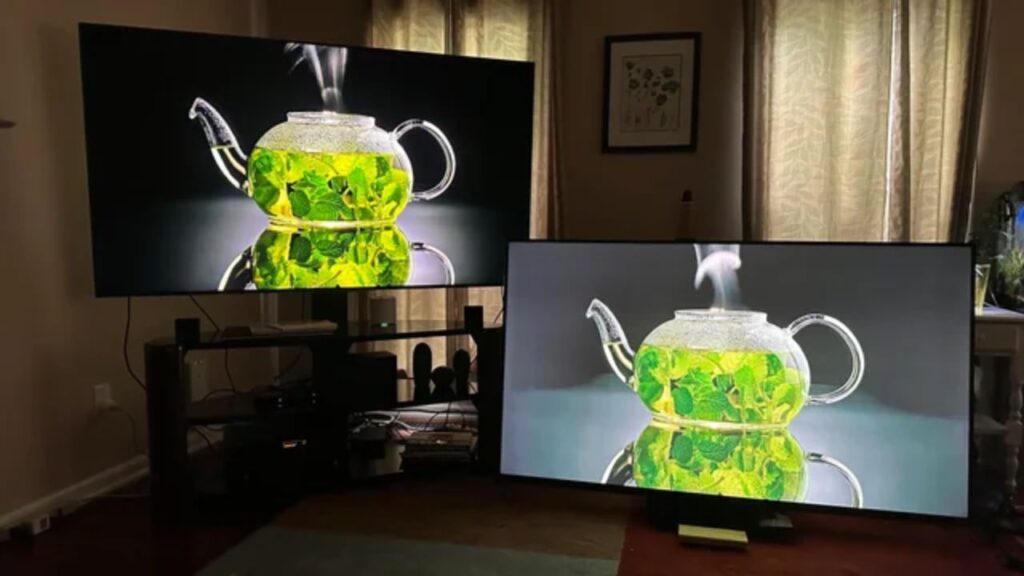
It is necessary to divide Vizio and Hisense into three pricing categories in order to compare their picture quality: low, medium, and premium. To find out which model has better picture quality, I’ll show one of the best models from each manufacturer in each price range.
Vizio V-Series vs Hisense U6K (Budget Picture Quality)
Hisense and Vizio both offer decent quality when it comes to low-cost TVs, but there are some important differences.
Vizio’s less expensive models, such the Vizio V-Series, have good color accuracy but subpar brightness and contrast. They have VA panels, which may have limited viewing angles but are great for contrast and dark levels.
However, Hisense has a slight edge over Vizio thanks to products like the Hisense U6K. ULED technology significantly increases color brightness and contrast. However, because Hisense’s inexpensive TVs use VA screens similar to Vizio’s, the viewing angles are not ideal.
Hisense U7K vs. Vizio M-Series Quantum (Midrange Picture Quality)
As we enter the middle area, the Vizio vs. Hisense contest intensifies.
Where quantum TVs shine is in the Vizio M-Series Quantum Dot Technology, which enhances color accuracy and vibrancy in a way that appeals to me. Compared to Vizio’s inexpensive TVs, HDR content is much brighter and more colorful. The M-Series still uses VA panels, therefore the viewing angles are still poor even though the picture quality is significantly better than the low-cost Vizio series.
Because it offers models like the Hisense U7K in this price range, Hisense is still a better brand than Vizio. Hisense midrange TVs continue to advance because they mix ULED technology with Mini-LED backlighting, giving them exceptional brightness and contrast that can even rival high-end models from other brands!
Hisense also tends to handle black levels in this range better because to its more advanced local dimming functions. The overall picture quality is great for a midrange TV, especially in terms of color saturation and brightness, despite the regrettable fact that they still use VA screens.
Vizio P-Series Quantum X vs Hisense U8K (Premium Picture Quality)
At this price point, both brands keep the rivalry fiercer.
Vizio offers the P-Series Quantum X. The state-of-the-art Quantum Dot and full-array local dimming technology in these TVs offer exceptional color accuracy, deep blacks, and brightness. These TVs are excellent when it comes to HDR content; the watching experience offers the same cinematic feel you would expect from a high-end TV. However, the viewing angles continue to irritate me.
Even at this price point, Vizio TVs use VA screens, which can cause color distortion if they are not positioned directly in front of the TV.
Rich black levels, contrast, brightness, and color vibrancy are produced by combining Mini-LED and ULED technology in Hisense’s high-end devices, like the U8K series. Like the other low-cost models, Hisense premium models outperform Vizio devices in terms of image quality. Additionally, Hisense manages HDR content more effectively, allowing viewers to maximize their 4K enjoyment.
Hisense enjoys incorporating VA screens into its TVs, even high-end models like the U8K, much like Vizio. As a result, be ready for a limited range of viewing angles.
Hisense vs Vizio: Smart Features and User Experience
Vizio’s main smart platform is called SmartCast. SmartCast was a little slow and difficult to use at first. However, with subsequent improvements, Vizio has been able to enhance the user experience.
SmartCast now offers the most popular streaming services, including Netflix, Hulu, and Disney+. Additionally, SmartCast integrates with Apple AirPlay and Google Cast, simplifying streaming for those that are loyal to either iOS or Android.
Vizio TVs of all price points are compatible with the SmartCast platform; however, certain less expensive models are said to have slower processing speeds. It’s also important to keep in mind that SmartCast shows commercials on inexpensive TVs such as the V-Series. Google Assistant and Amazon Alexa are compatible with SmartCast for voice control.
Hisense TVs Smart Features and User Experience
Hisense offers several smart platforms at different price points. Both Roku and Google TV come in low-cost and mid-range models. On midrange to high-end devices, Google TV is more common.
With a huge selection of streaming apps, Roku is renowned for being user-friendly and intuitive. Roku supports Apple AirPlay, just like Vizio’s SmartCast, so you can effortlessly stream media from your iOS device to your Hisense TV. For voice controls, Roku supports both Amazon Alexa and Google Assistant.
Google TV offers a more personalized experience by suggesting certain content. It is also very compatible with Google Cast and Google Assistant, so you can easily stream media from your Android tablet or smartphone to your TV and enjoy the convenience of voice commands with Google Assistant.
VIDAA U is another platform that may be found on some Hisense TVs. VIDAA U is still quick, simple to use, and provides rapid access to apps and streaming services, even though I personally prefer Google TV and Roku on Hisense TVs. Hisense itself constructed it.
Hisense or Vizio, Which is Better in Terms of Smart Features?
In conclusion, Vizio’s SmartCast is perfect for those who value simplicity of use and the ability to stream directly from their devices, especially for devoted Apple customers who value AirPlay. However, there are times when the response time is bothersome.
Hisense, which often comes with Google TV, provides a more advanced and integrated experience than Vizio, with voice control and faster response times.
Vizio TVs Gaming Performance
It is evident that Vizio has made gaming a top priority for all of its product lines. Even a low-cost series like the Vizio V-Series may offer excellent gaming features like low input lag and VRR (Variable Refresh Rate) compatibility. VRR reduces the stuttering and tearing of the display.
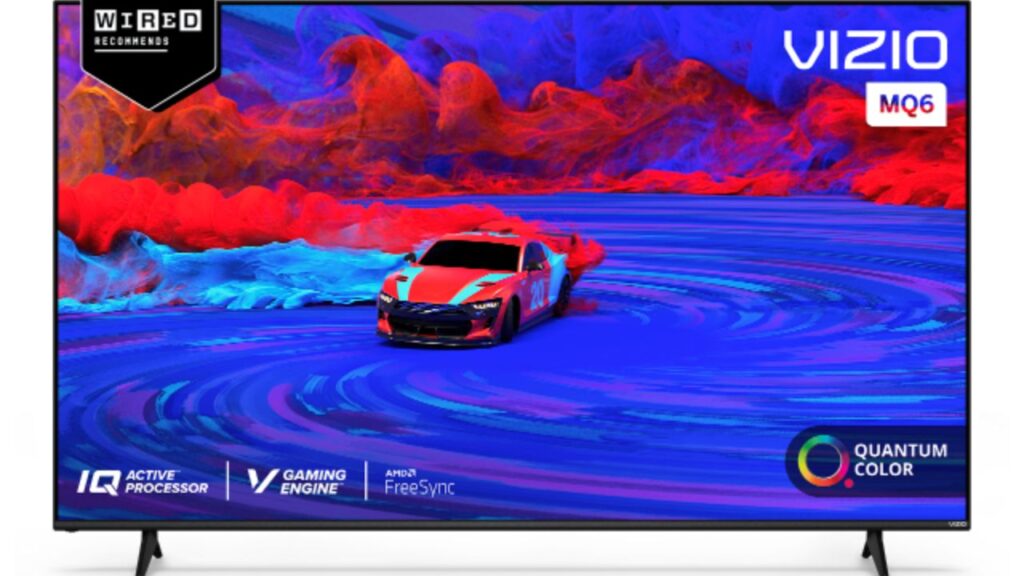
Midrange and high-end Vizio TVs have additional capabilities to accommodate gamers. For example, the Vizio M-Series Quantum offers a refresh rate of 120 Hz, reduced input lag, and VRR capability. These features offer minimal screen tearing and lag-free gameplay.
Additionally, moderate to high-end Vizio TVs are compatible with consoles like the PS5 and Xbox Series-X since they support HDMI 2.1, which allows them to run 4K games at high frame rates.
Hisense TVs Gaming Performance
Hisense is comparable to Vizio in terms of gaming performance. Low-cost models, such as the popular U6K, offer VRR and little input lag to reduce screen tearing in addition to a refresh rate of 60Hz that is similar to the Vizio V-Series.
A 120Hz frame rate, minimal input lag, VRR, and support for HDMI 2.1 for 4K gaming are other characteristics that enhance performance. Moderate to high-end Hisense TVs, such the U7K and U8K series, have these features.
Gaming Experience: Verdict
Hisense has a little advantage because their TVs have better contrast and brightness, which improves the gaming experience, especially in HDR, even if both brands’ TVs offer the necessary features for a flawless gaming experience—discussed in the picture quality section. However, the Vizio V-Series is a fantastic and attractive choice for anyone on a limited budget who are unable to purchase the Hisense U6K.
Connectivity Comparison
Connectivity is crucial, especially if you plan to connect your TV to numerous external devices. Among the main ports offered by both brands are RCA, optical, Ethernet, and AUX. However, comparable Vizio TVs (M and P) only feature one HDMI 2.1 connector, but Hisense TVs like the U7K and U8K series have two. This is a disadvantage for Vizio TVs and bad news for anyone who have a lot of external devices.
Vizio vs Hisense: Build Quality and Design
Although Hisense and Vizio offer different concepts, both have promising build quality.
Vizio TVs, especially those in the medium to premium price range, have a minimalistic look that makes them seem robust and modern thanks to their slim bezels (the frame around the screen) and combination of plastic and metal.
Hisense, on the other hand, gives their TVs a more industrial appearance, particularly in more costly versions like the U8K series. Their main priority is functionality rather than beauty.
Sound Quality Comparison
I don’t think TV speakers are reliable sources of audio. They don’t offer the immersive experience you would expect for games or movies, but they are useful for viewing conventional TV, such as sports or the news.
Vizio is leading in this situation because of this. Under the Vizio brand, Vizio offers a selection of high-quality soundbars and subwoofers that are perfect for enhancing your audio experience. One benefit of owning a Vizio TV and soundbar is that compatibility issues are eliminated and setup is made easier.
Conclusion
Finally, after discussing the most important TV features and contrasting Vizio with Hisense, you can see that Hisense is the superior brand in terms of picture quality, gaming experience, and connectivity. For those on a tight budget, the Vizio V-Series is still an excellent option.