iPhone vs Samsung
Did you know about iPhone vs Samsung, if yes then this article is for you. We will be discussing. Read on for more.
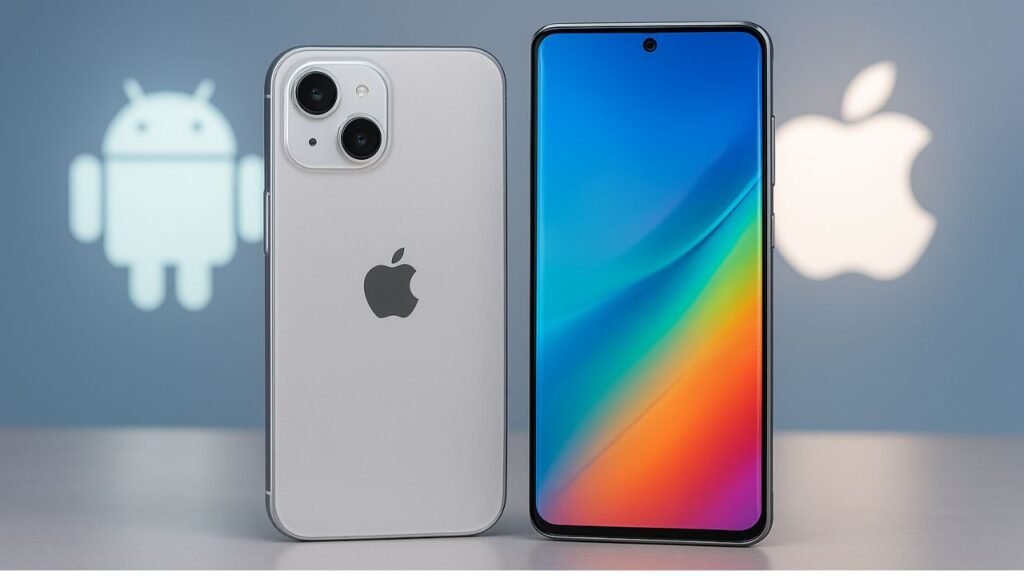
The iPhone vs. Samsung smartphone controversy has been raging for years. Leading the worldwide smartphone market, both brands are renowned for their superior quality, innovation, and customer happiness. However, because each has advantages of its own, selecting between them might be difficult.
To assist you choose which device best suits your lifestyle, let’s compare the iPhone and Samsung in terms of design, performance, camera, features, and value..
1. Design and Build Quality
Both iPhone and Samsung offer beautiful and premium designs.
Strong materials like stainless steel or aluminum give iPhone models their timeless, simple appearance. Apple prioritizes symmetry, beauty, and high-quality construction. Although the design doesn’t alter significantly each year, it always has a sophisticated, opulent vibe.

Conversely, Samsung enjoys trying new things. Its flagship phones, including as the Z Fold/Flip and Galaxy S series, have futuristic foldable screens, vivid colors, and smooth curved edges. Apple’s classic simplicity contrasts with Samsung’s more inventive and contemporary design language.
The iPhone looks sophisticated and sturdy, while Samsung offers more variety and innovative design.
2. Display Quality
When it comes to screens, Samsung leads the industry.
Dynamic AMOLED screens from Samsung are renowned for their brightness, rich colors, and deep blacks. With a refresh rate of 120 Hz, the majority of Samsung flagships provide wonderfully fluid scrolling and gaming.
Apple’s Super Retina XDR displays, which are also sharp and color-accurate, are used in iPhones. Samsung’s panels are bright and vivid, whereas Apple’s are a little warmer and more realistic.
Conclusion: In terms of display technology, Samsung prevails. Although iPhones are equally high-end for daily use, its screens are more fluid and brighter.
3. Software – iOS vs Android
This is the biggest difference between iPhone and Samsung.
iOS, which powers the iPhone, is renowned for being clear, safe, and easy to use. All Apple gadgets have an easy-to-use UI. Everyone receives timely updates; even older models receive new versions for up to five or six years.

Samsung uses One UI, its own Android skin. With its many options, you can alter icons, themes, widgets, and other aspects of your phone. Additionally, Samsung has enhanced its update policy by providing software support for up to seven years on new devices, such as the Galaxy S24 series.
Verdict: iPhone is best for stability and simplicity. Samsung is best for flexibility and customization.
4. Camera Performance
Both brands offer top-notch cameras, but they shine in different ways.
iPhones are renowned for their outstanding video quality, balanced exposure, and natural color tone. The iPhone produces fluid, lifelike images whether you’re taking a quick selfie or a long-form video.
Samsung cameras are enjoyable and powerful. They frequently have superior zoom, more sophisticated AI functions, and higher megapixel counts (up to 200MP on the Galaxy S24 Ultra). Samsung images typically appear more vibrant and crisper.
Conclusion: For consistency and video, the iPhone is the best option. For zoom pictures and artistic photography, Samsung is superior.
5. Performance and Speed
Performance is where both shine equally.
Apple’s proprietary A-series semiconductors, such as the A17 Pro, are used in iPhones and are extraordinarily quick and effective. Games run nicely, apps launch immediately, and multitasking is a breeze.
In the USA, Samsung uses Qualcomm Snapdragon processors (and Exynos in other territories). The most recent Snapdragon 8 Gen 3 chip is really strong and can easily multitask and play games.
However, iPhones have a modest advantage in terms of performance and energy economy due to Apple’s close integration of hardware and software.
Conclusion: Although Samsung’s power is almost similar in practical applications, the iPhone offers more seamless optimization.
Also Read About Best Budget Gadgets 2026: Smart Tech You Can Actually Afford
6. Battery Life and Charging
These days, both phones have great battery lives that can easily last a full day.
Because of their streamlined software, iPhones are renowned for using batteries efficiently. But charging rates are slower, often 15W wireless and 20W wired.
Samsung charges considerably more quickly; high-end models can charge up to 45W connected. A 50% charge can be obtained in roughly half an hour. Additionally, Samsung allows reverse wireless charging, so you may use your Galaxy mobile to charge your earbuds or another phone.
Conclusion: The iPhone charges slowly yet lasts a long time. Samsung has greater battery features and charges more quickly.
7. Privacy and Security
People are very serious about their privacy. Strong data security, little app tracking, and features like Face ID and end-to-end encryption in iMessage are all aspects of iPhones. Compared to Android phones, Apple gathers very less user data.
Samsung also prioritizes security via Samsung Knox, which safeguards private information and online transactions. But because it’s Android-based, consumers have more power, but if they’re not careful, there are a few extra risks.
Conclusion: Samsung strikes a balance between security and adaptability, while the iPhone excels in privacy.
8. Price and Value
Depending on your budget, the price difference may be substantial.
In the United States, the base model (such as the iPhone 15) costs about $799, while the Pro Max variants cost more than $1,199. Even after years of use, iPhones maintain a high resale value despite their high cost.
Samsung offers a wider range — from affordable Galaxy A-series phones (around $250–$500) to premium S-series and Z Fold models that can cost over $1,000. This variety makes Samsung more budget-friendly overall.
Verdict: Samsung is better for all price ranges. iPhone offers better long-term value and resale.
9. Ecosystem and Compatibility
Apple’s ecosystem is its greatest asset. The iPhone easily connects to MacBooks, iPads, Apple Watches, and AirPods. With iCloud, everything syncs flawlessly.
With the Galaxy Watch, Galaxy Buds, and SmartThings, Samsung’s ecosystem is expanding as well, but Apple’s ecosystem is more sophisticated and cohesive.
Conclusion: The iPhone is a better fit if you utilize other Apple items. Samsung is more adaptable if you use Android or Windows devices.
10. Innovation and Extra Features
Samsung tends to be more daring. Its inventive edge is demonstrated by foldable phones like the Galaxy Z Fold 6 and Z Flip 6. Additionally, it has DeX mode, which allows your phone to function as a desktop computer.
The iPhone prioritizes dependability and sophistication. It is distinctive but less innovative than Samsung thanks to features like MagSafe charging, Face ID, and Dynamic Island.
Conclusion: Samsung is at the forefront of innovation. In terms of polish and user experience, the iPhone triumphs.
Final Verdict: iPhone or Samsung?
Both brands deliver world-class smartphones, but the right one depends on your needs.
| Category | Winner |
|---|---|
| Design | Samsung |
| Display | Samsung |
| Software | iPhone |
| Camera (Photos) | Samsung |
| Camera (Videos) | iPhone |
| Battery & Charging | Samsung |
| Privacy | iPhone |
| Price Options | Samsung |
| Ecosystem | iPhone |
Choose iPhone if you want:
- Simple and smooth experience
- Strong privacy and security
- Long software updates
- Best video camera quality
- Seamless Apple ecosystem
Choose Samsung if you want:
- Beautiful displays and fast charging
- Customization and flexibility
- Better zoom and photo options
- Foldable phone options
- Wider price range
Conclusion
Ultimately, depending on your preferences and way of life, both the iPhone and Samsung are great options. Choose the iPhone if you desire dependability, privacy, and long-lasting performance. Samsung may be the ideal choice if you want cutting-edge technology, innovation, and personalization.
You will receive one of the greatest cellphones available in any case.